
Practical questions
Recurrent herpes: episodic or suppressive-care discussion
For confirmed recurrent genital herpes, care can focus on individual outbreaks or ongoing suppression. These approaches have different purposes and are discussed with the clinician, not chosen from a forum schedule. The right conversation includes how often episodes occur, their effect on life and what you hope treatment will achieve.
General information for adults. Not a substitute for medical assessment.
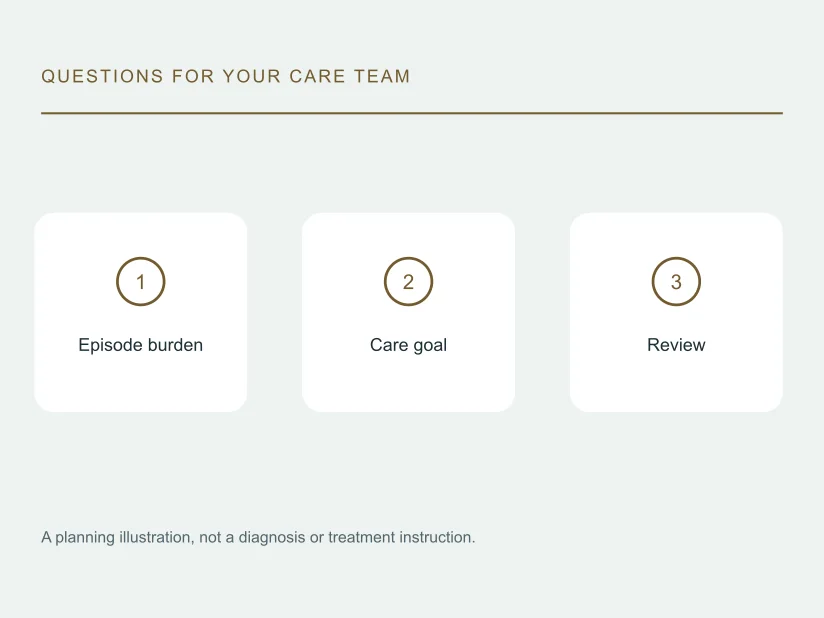
Describe the burden rather than counting alone
Bring a record of episodes, discomfort, missed activities and any warning symptoms before lesions appear. Mention the confirmed HSV type if known, pregnancy plans, immune conditions, kidney problems and other medicines. Episode frequency is useful, but distress and practical access to care also matter. If lesions are new or look different, ask whether the diagnosis needs checking instead of assuming that every genital sore is another recurrence of the same condition.
Source: CDC: recurrent herpes management and shared decisions
Understand the two management aims
Episodic care is planned to address a recurrence; suppressive care aims to reduce recurrences over time. Neither approach eradicates latent herpes virus. Discuss expected benefits, limitations and the instructions for your own prescription without requesting a borrowed course or copying a medicine combination. The clinical conversation may differ for HSV-1 and HSV-2. Ask what to do at the first warning sign and how to contact the team if the agreed approach is not helping.
Source: CDC: recurrent herpes management and shared decisions
Review the plan and keep prevention separate
Ask when to revisit the decision, especially if the recurrence pattern, relationships or reproductive plans change. Suppression is not a guarantee of zero transmission or a reason to ignore symptoms and barrier advice. Agree what contact precautions apply during warning symptoms or lesions and how to discuss partner concerns. Severe pain, trouble passing urine, eye symptoms or significant illness needs prompt review rather than simply extending a recurrent-episode plan without assessment.
Source: CDC: recurrent herpes management and shared decisions
Common questions
Does suppression eradicate herpes?
No. Its aim is management, not eradication of latent virus.
Is the choice based only on the number of outbreaks?
No. Severity, impact, preferences and clinical circumstances also matter.
Can I copy another person’s episodic plan?
No. Obtain your own diagnosis-specific prescription and instructions.
Sources and information limits
Sources support general medical principles, not the UAE booking policies or service availability. Confirm instructions and local arrangements with the care provider. The update date does not claim clinician review.
Content policy and review statusQuestions before arranging an appointment?
Enquire about the next steps and availability. An enquiry does not confirm a booking or diagnosis and is not an emergency service.